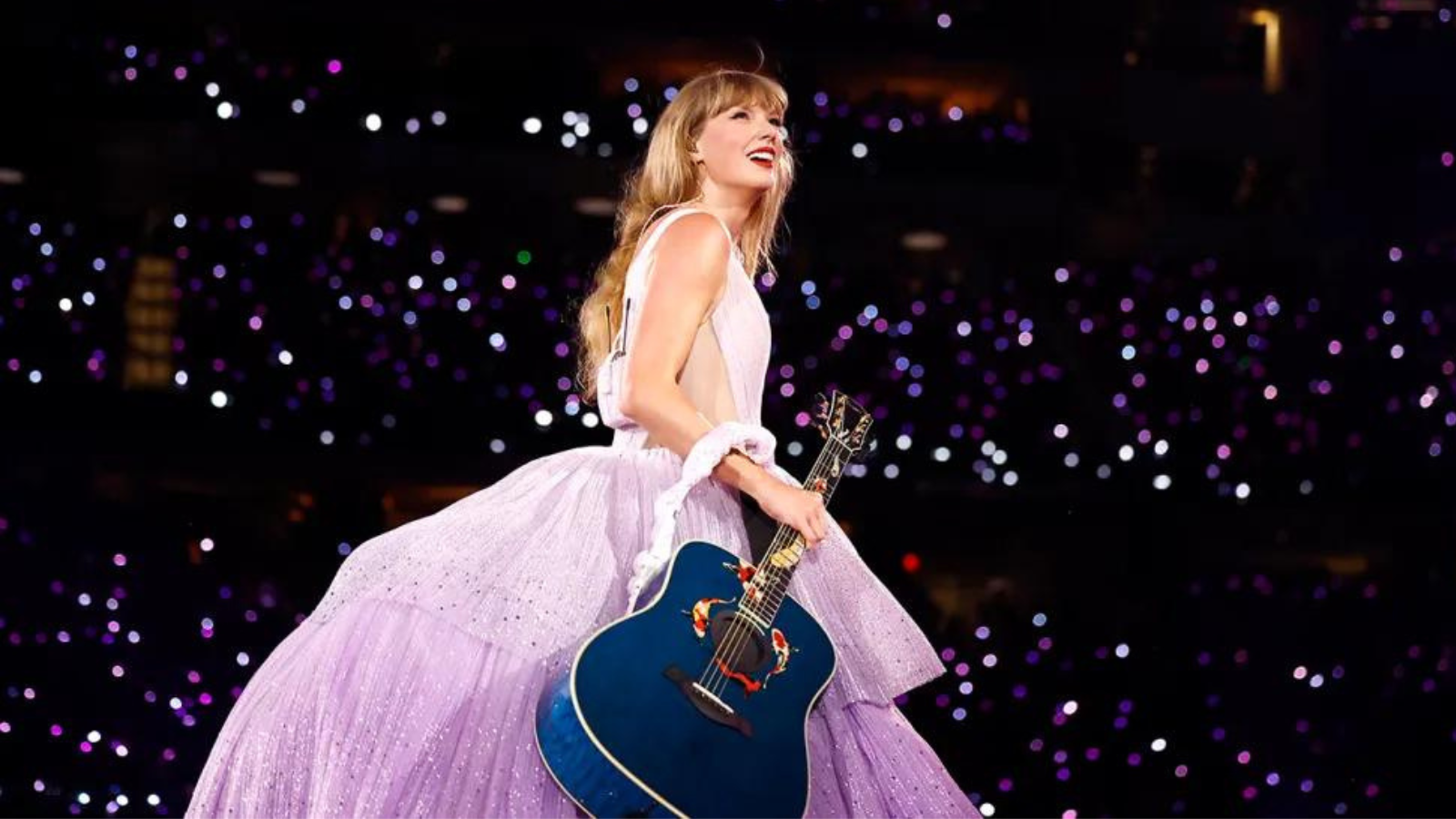
Taylor Swift is taking new legal steps to protect her identity in an era increasingly shaped by artificial intelligence. Recent filings show the global pop star is seeking trademarks tied to her voice and visual likeness—an effort widely seen as a response to the rapid rise of AI-generated deepfakes and voice replication technology.
According to reports from Associated Press and Reuters, Swift submitted multiple applications to the U.S. Patent and Trademark Office through her company, TAS Rights Management. These filings include so-called “sound marks,” which aim to legally protect recognizable audio clips of her speaking, as well as visual elements associated with her performances.
The move reflects growing concern across the entertainment industry about how easily AI tools can mimic a celebrity’s voice or image. In recent months, viral deepfake content—including fake ads and manipulated videos—has demonstrated how convincingly public figures can be replicated without consent. Swift herself has previously been the subject of widely circulated AI-generated images, intensifying calls for stronger protections.
Trademark law offers a different kind of safeguard than copyright. While copyright typically protects original recordings or images, trademarks can be used to challenge content that creates confusion around a person’s brand or identity. Legal experts cited by Reuters note that this approach could give Swift broader grounds to act against unauthorized AI-generated material that imitates her persona.
Still, questions remain about how effective these protections will be. Analysts say the legal system is still adapting to the speed and scale of AI innovation, and enforcement may prove challenging, especially online where content spreads rapidly.
Swift’s latest filings highlight a shift in how artists are thinking about ownership—not just of their music, but of their identity itself. As AI continues to evolve, her actions could influence how other performers, studios, and public figures approach the protection of their voice and likeness in the digital age.







 ddd
ddd